Galápagos Islands Face Powerful El Niño as Flooding Disrupts Tourism and Threatens Wildlife
Galápagos El Niño 2026: The Galápagos Islands remain open to visitors following devastating floods, but an intensifying El Niño threatens the archipelago’s fragile ecosystems and could disrupt travel well into 2027.
The Galápagos Islands are confronting one of their most serious environmental challenges in decades as a powerful El Niño brings unusually warm ocean temperatures, destructive rainfall, and growing threats to the wildlife that makes the Ecuadorian archipelago one of the world’s most extraordinary travel destinations.
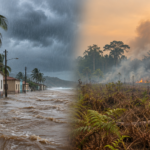
Severe flooding on Santa Cruz Island in late October killed one person, damaged hundreds of homes, and affected more than 2,700 residents. Although flights, cruises, and most tourism operations have resumed normal schedules, several popular visitor sites remain closed.
Scientists warn that the worst ecological consequences may still lie ahead.
El Niño Could Become One of the Strongest on Record
The National Oceanic and Atmospheric Administration (NOAA) reported November 12 that El Niño continues to intensify, with a greater than 79% probability of strong-to-very-strong conditions persisting through January–March 2027.
NOAA also estimates approximately a 60% chance that the event will reach historically exceptional strength during the late-2026 peak period.
For the Galápagos, located approximately 600 miles west of mainland Ecuador, the consequences extend far beyond warmer weather.
El Niño weakens the normal upwelling of cold, nutrient-rich water that supports the islands’ marine food chain. As nutrients decline, populations of plankton, algae, and small fish can diminish, leaving larger marine animals struggling to find sufficient food.
Wildlife Faces Growing Threats
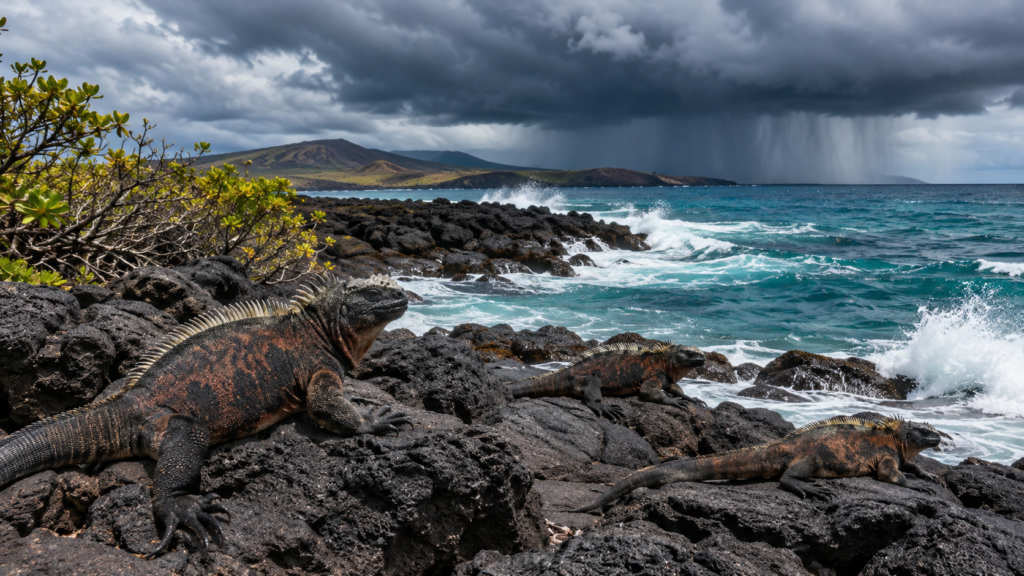
According to the Charles Darwin Foundation, the developing El Niño threatens several of the islands’ most recognizable species, including Galápagos penguins, marine iguanas, sea lions, and flightless cormorants.
Marine iguanas depend on algae for food, while penguins and sea lions rely on fish populations supported by the nutrient-rich currents. Warmer water can disrupt feeding and reproduction, potentially causing substantial population declines.
Historical events illustrate the danger. During the 1982–1983 El Niño, Galápagos penguin numbers fell dramatically. Subsequent powerful events have also caused severe ecological disruption.
Heavy rainfall presents additional challenges on land, encouraging invasive vegetation, damaging nesting areas, and threatening endemic forests and cacti.
These ecological changes could affect wildlife-viewing opportunities for years, even after ocean temperatures return to normal.
Devastating Floods Hit Santa Cruz
On October 30–31, torrential rainfall overwhelmed drainage channels on Santa Cruz, sending floodwaters through Puerto Ayora’s residential neighborhoods.
In some areas, water reportedly reached approximately three meters, or nearly ten feet, damaging homes, roads, and essential infrastructure.
The principal road connecting Baltra Airport with Puerto Ayora also sustained damage, temporarily complicating transportation across the island.
The flooding exposed the vulnerability of communities whose economies depend heavily on tourism and the reliable movement of visitors, food, and supplies.
Is It Safe to Visit the Galápagos?
Despite the damage, the Galápagos Islands remain open for tourism, and there is currently no indication that travelers should automatically cancel planned visits.
A November 11 tourism industry update, based on information from park authorities, reported that:
- Flights to Baltra and San Cristóbal were operating normally.
- Cruises, day tours, and inter-island boats had resumed regular operations.
- The main Baltra–Puerto Ayora road had reopened.
- Puerto Ayora’s principal tourism and commercial districts were functioning.
- Several national park visitor sites remained temporarily restricted.
Among the reported closures were Las Grietas, El Chato, and El Puntudo on Santa Cruz; Puerto Chino and Playa Baquerizo on San Cristóbal; and the wetlands on Isabela. Other sites, including El Garrapatero and La Lobería, had reopened.
These restrictions can change quickly as park officials evaluate weather, trail conditions, and visitor safety. Travelers should confirm current access with their tour operators before departure.
What Travelers Should Expect Through Early 2027
The immediate tourism outlook is continued operations with greater uncertainty.
Visitors should prepare for heavier rainfall, occasional flooding, rough seas, and possible changes to cruise itineraries, snorkeling excursions, and wildlife-viewing locations.
Travelers planning visits over the next several months should consider flexible reservations, travel insurance that covers weather-related disruptions, and extra time between inter-island connections and international flights.
Conditions may also affect underwater visibility and the distribution of marine wildlife. Warmer seas could change which species visitors encounter, although these changes should not be interpreted as improvements in ecosystem health.
Ecuadorian meteorological forecasts suggest unusually heavy rainfall could continue into February 2027.
Tourism Remains Essential to Recovery
For the Galápagos economy, a prolonged tourism slowdown could compound the damage flooding has already inflicted.
Hotels, restaurants, guides, boat operators, and small businesses depend on visitors for employment and income. Many residents are now rebuilding homes and replacing belongings lost during the storms.
Continuing to visit the islands, when conditions permit, can support that recovery. Travelers can contribute by using locally owned accommodations, hiring licensed guides, and respecting temporary conservation restrictions.
The Galápagos remain one of the world’s most remarkable wildlife destinations. But the developing El Niño reminds us that the islands’ extraordinary biodiversity depends on a delicate environmental balance.
For travelers, the message is straightforward: The Galápagos are still welcoming visitors, but flexibility, preparation, and respect for local conditions are more important than ever.
Sources
- NOAA Climate Prediction Center, November 12, 2026: https://www.cpc.ncep.noaa.gov/products/analysis_monitoring/enso_advisory/ensodisc.shtml
- Charles Darwin Foundation, El Niño 2026 in Galápagos: https://www.darwinfoundation.org/en/news/all-news-stories/el-nino-2026-in-galapagos/
- Galápagos Conservation Trust, November 9, 2026: https://galapagosconservation.org.uk/el-nino-floods-galapagos/
- El Comercio, November 15, 2026: https://www.elcomercio.com/actualidad/ecuador/galapagos-reabre-sitios-turisticos-restricciones/
- Condé Nast Traveler, November 9, 2026: https://www.cntraveler.com/story/what-travelers-should-know-about-the-galapagos-floods-and-the-ongoing-impact-of-el-nino
About The Author