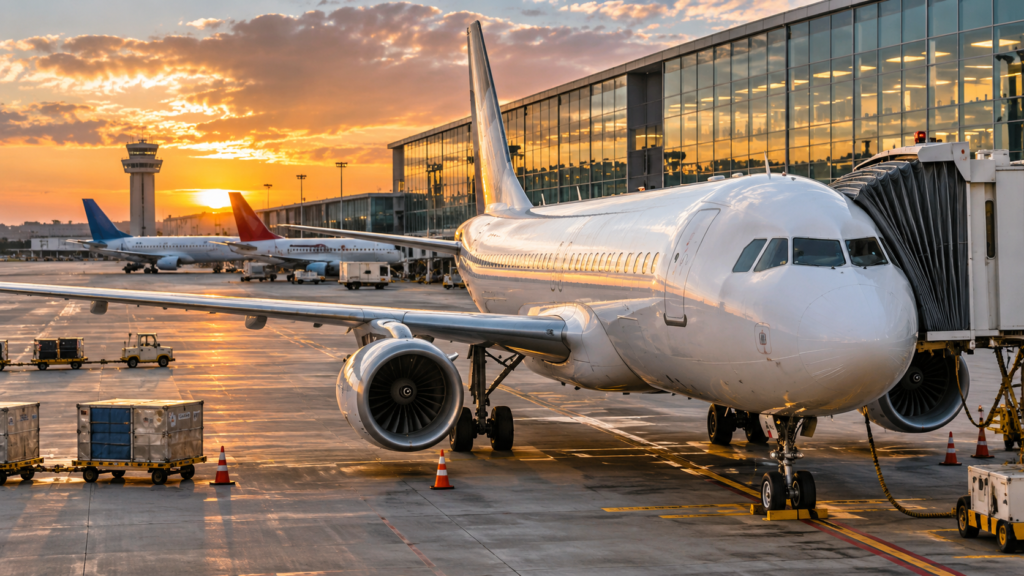
Airlines face continued pressure from fuel costs and operating expenses, although airfare increases are expected to moderate in 2027.
2027 airfare predictions: Airline ticket prices have climbed sharply over the past year, driven by soaring fuel costs, aircraft shortages, and strong travel demand. New industry forecasts suggest that 2027 could bring some relief, although cheaper tickets are far from guaranteed.
Airline Fares Rise Much Faster Than Inflation
Air travelers have faced substantial increases in ticket prices during 2026, with U.S. airfares rising considerably faster than the overall cost of living.
According to the U.S. Travel Association, airline fares in October 2026 were an estimated 26.2% higher than a year earlier, compared with a 3.9% increase in overall consumer prices.
The association cautions that these annual comparisons are estimates because the federal government did not collect October 2025 pricing data during a shutdown. Nevertheless, September figures also showed a substantial increase, confirming that the upward trend extends beyond a single month. U.S. Travel Association+1
The increases represent a significant reversal from the more competitive pricing environment travelers experienced on many routes during 2025.
Why Have Airfares Increased So Sharply?
Several factors have contributed to higher ticket prices, but the most important has been a dramatic increase in aviation fuel costs.
The International Air Transport Association (IATA) reports that disruptions to Middle Eastern energy supplies during 2026 caused jet fuel prices to surge. The crisis placed extraordinary pressure on airline operating expenses, forcing carriers to reconsider routes, schedules, and ticket pricing.
According to Airlines for America, U.S. jet fuel spot prices averaged $4.64 per gallon in October, exceeding the previous month’s record.
Aircraft delivery delays have also constrained airlines’ ability to expand capacity. When demand exceeds available seats, airlines have less incentive to offer discounted tickets.
At the same time, airlines are increasingly relying on baggage fees, seat-selection charges, and other ancillary revenue to offset rising expenses. IATA+1
International Airfare Trends Vary by Region
Although higher fares have affected travelers worldwide, the increases have not been uniform.
North America and Europe have experienced particularly strong pricing pressure because of aircraft shortages, fuel expenses, and operating costs.
Latin America presents a somewhat different picture. According to the Global Business Travel Association (GBTA), additional airline capacity in the region has helped moderate some fare increases, although prices vary considerably by destination.
For travelers flying between North America and Latin America, this makes comparing airlines, departure airports, and connecting itineraries particularly important. GBTA
What Will Happen to Airfares in 2027?
The outlook for next year is more encouraging.
A July 2026 forecast from GBTA and travel management company ALTOUR predicts that global airfare increases will slow significantly in 2027.
| Fare category | 2026 increase | 2027 forecast |
|---|---|---|
| Overall global fares | 4.7% | 1.5% |
| Economy class | 8.7% | 1.1% |
| Premium cabins | 9.5% | 2.2% |
Source: GBTA/ALTOUR 2027 Global Business Travel Forecast. Figures represent managed business travel pricing rather than all leisure fares. GBTA
The forecast suggests that airfare inflation could slow dramatically, particularly for economy-class passengers.
However, slower price increases do not mean that tickets will become cheaper. Instead, airlines are expected to keep raising prices, but at a much slower pace than in 2026.
Three Factors That Could Change the Forecast
The outlook for 2027 depends heavily on developments that remain difficult to predict.
Fuel prices: A sustained decline in energy costs would provide airlines with an opportunity to stabilize fares. Further geopolitical disruptions could produce the opposite result.
Aircraft availability: Additional deliveries from Boeing, Airbus, and other manufacturers could increase competition by allowing airlines to expand schedules and add seats.
Consumer demand: A weakening global economy could encourage airlines to discount tickets to attract passengers. Conversely, continued strong demand would support higher prices.
Reuters reported in October that some U.S. airlines were increasingly prioritizing higher ticket revenue over filling every available seat. However, expanding airline capacity in 2027 could test that pricing strategy. Reuters
How Travelers Can Save on Flights in 2027
Although travelers cannot control airline pricing, several strategies can help reduce costs.
- Compare nearby airports. Departing from a secondary airport or connecting through a different hub can sometimes save you money.
- Travel outside peak periods. Avoiding major holidays and school vacation periods often provides more affordable options.
- Monitor fares before booking. Price-tracking services can help identify unusually favorable fares.
- Compare total ticket costs. Baggage fees, seat selection, and other charges can substantially increase the final price.
- Remain flexible. Shifting departure or return dates by even a few days can reveal lower fares.
Travelers should also avoid assuming that booking on a particular day of the week guarantees a bargain. Pricing algorithms respond continuously to demand, competition, and available seats.
The Bottom Line
After a year of unusually steep increases, 2027 could bring welcome stability to airline pricing.
The most credible industry forecasts anticipate substantially slower fare increases, particularly for economy passengers. However, continued pressure from fuel costs, aircraft shortages, and operating expenses makes widespread price reductions unlikely without a meaningful change in market conditions.
For travelers planning international trips in 2027, the outlook is cautiously encouraging.
Flights may not become cheaper, but the rapid price increases experienced during 2026 could finally begin to ease.
Sources
1. U.S. Travel Association — Travel Price Index, November 10, 2026
https://www.ustravel.org/research/travel-price-index
2. Global Business Travel Association — 2027 Global Business Travel Forecast, July 2026
https://gbta.org/research/business-travel-forecast-2027/
3. International Air Transport Association — Global Outlook for Air Transport, June 2026
https://www.iata.org/en/publications/economics/reports/global-outlook-for-air-transport-june-2026
4. Airlines for America — Thanksgiving Travel and Jet Fuel Costs, November 10, 2026
https://www.airlines.org/news-update/u-s-airlines-prepare-for-busy-thanksgiving-travel-period-amid-record-high-jet-fuel-costs/
5. Reuters — U.S. Airlines Favor Higher Fares Over Fuller Planes, October 23, 2026
https://www.reuters.com/business/us-airlines-favor-higher-fares-over-fuller-planes-fuel-costs-squeeze-profits-2026-10-23/
About The Author