 Editor in Chief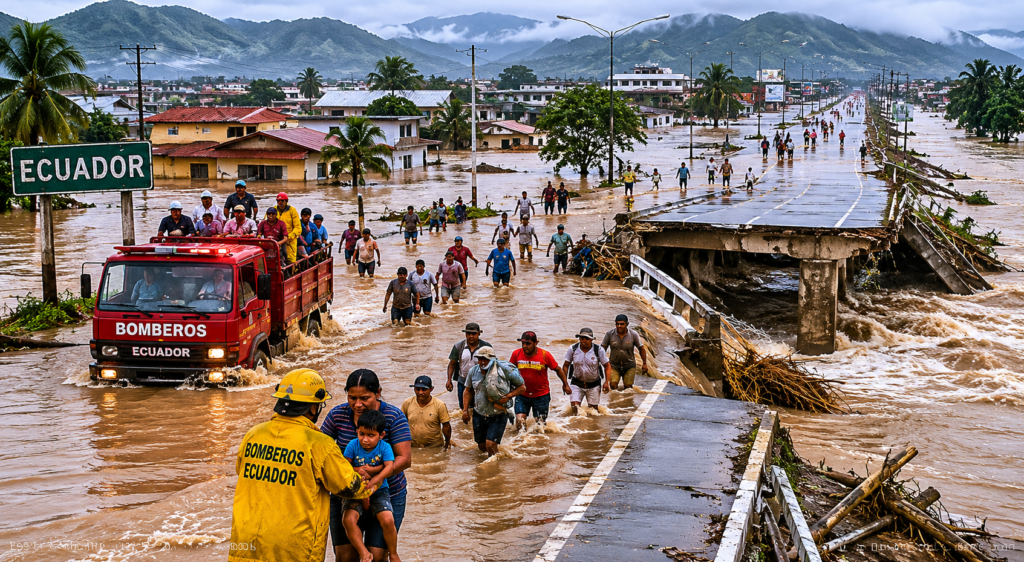
By Mundo Travel News
When Ecuadorians talk about El Niño, one event stands above all others: the devastating 1997–1998 El Niño, widely regarded as the most destructive weather disaster in the country’s modern history.
Nearly three decades later, its effects are still remembered in flooded coastal towns, rebuilt highways, altered farming practices, and the national conversation about disaster preparedness. As climate experts continue to monitor future El Niño cycles, the 1997–98 event remains the benchmark against which all others are measured.
A Perfect Storm in the Pacific
El Niño occurs when unusually warm ocean waters develop across the eastern Pacific Ocean, disrupting weather patterns around the world. The 1997–1998 event was among the strongest ever recorded globally, producing extreme weather from California to Indonesia. Ecuador, located directly on the Pacific coast, found itself at the center of the phenomenon.
Beginning in late 1997, sea surface temperatures off Ecuador’s coast rose dramatically. The warmer waters fueled months of intense rainfall across coastal provinces including Guayas, Manabí, Los Ríos, El Oro, Esmeraldas, and Santa Elena.
By early 1998, rivers had overflowed, roads had collapsed, bridges were washed away, and entire communities were isolated by floodwaters.
Human Toll Across the Coast
The flooding forced tens of thousands of people from their homes. Government and humanitarian reports documented widespread destruction of housing, public infrastructure, and essential services. Coastal cities and towns experienced some of the worst impacts, with transportation networks severely disrupted for months.
Official figures cited in later assessments reported approximately 286 deaths, while thousands more suffered from disease outbreaks linked to contaminated water and stagnant floodwaters. More than 30,000 people were displaced, creating a major humanitarian emergency.
The disaster also damaged more than 15,000 homes, with thousands completely destroyed. Communities in Manabí, Esmeraldas, and the Santa Elena Peninsula were among the hardest hit.
Economic Damage Measured in Billions
The economic consequences were staggering.
Studies conducted by international organizations estimate total losses at approximately $2.8 to $2.9 billion, equivalent to roughly 15 percent of Ecuador’s GDP at the time. Direct damage included destroyed roads, bridges, schools, hospitals, and homes. Indirect losses came from reduced agricultural production, business interruptions, transportation disruptions, and declining exports.
Agriculture suffered some of the largest losses. Flooding destroyed crops, damaged irrigation systems, and disrupted food distribution networks. Major crops including rice, bananas, coffee, and cacao experienced significant setbacks. Infrastructure damage made it difficult for farmers to transport products to domestic and international markets.
Researchers later found that many rural households experienced substantial declines in income, food consumption, and employment opportunities following the disaster.
A Contributor to Ecuador’s Economic Crisis
The El Niño disaster arrived at a particularly vulnerable moment for Ecuador.
The country was already facing economic challenges, and the massive costs of rebuilding infrastructure placed additional strain on public finances. Many economists consider the destruction caused by El Niño to have been one of several major factors that contributed to Ecuador’s broader economic and financial crisis of 1998–1999.
Government spending increased sharply as authorities attempted to repair damaged infrastructure while supporting affected communities. At the same time, agricultural exports and economic activity declined, reducing revenues.
Lessons That Still Matter Today
The 1997–1998 disaster transformed how Ecuador prepares for extreme weather events.
In the years that followed, the country invested in improved forecasting systems, flood monitoring, emergency planning, and infrastructure resilience. National and local governments developed more sophisticated disaster-response programs designed to reduce the impact of future El Niño events.
Those lessons became particularly important during later El Niño episodes, including the strong 2015–2016 event and the 2023–2024 coastal warming period. While these events still caused flooding and economic losses, Ecuador’s disaster-management capabilities were significantly stronger than they had been in 1997.
Looking Back
For many Ecuadorians, the floods of 1997–1998 remain a defining national memory. Entire highways disappeared under water, coastal communities were cut off from the rest of the country, and billions of dollars in economic activity were lost.
Nearly thirty years later, the event serves as a reminder that Ecuador’s location on the Pacific coast brings both opportunity and vulnerability. As climate variability continues to challenge nations worldwide, the story of the 1997–1998 El Niño remains one of the most important chapters in Ecuador’s modern history.
About The Author