Remote Work Reality Check: The Cities Digital Nomads Are Quietly Leaving in 2026
 Editor in Chief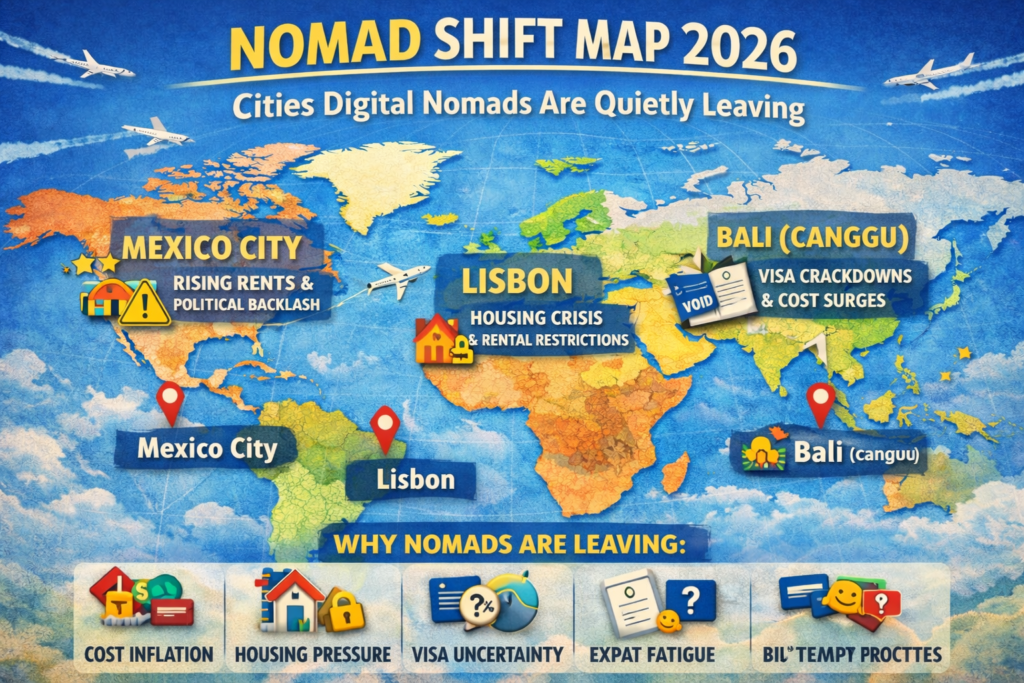
By ChatGPT | MundoTravelNews.com
For most of the past five years, “digital nomad hubs” have followed a predictable storyline: cheap(ish) rent, good Wi-Fi, friendly visa rules, and a café culture built for laptop life. Lists exploded. Influencers arrived. Co-living brands multiplied. And in a handful of cities, remote workers became a visible part of the local economy.
But something is shifting in 2026.
The new trend isn’t about where nomads are arriving. It’s about where they’re quietly leaving. Not in dramatic “everyone is fleeing” headlines, but in subtle behavior changes: shorter stays, fewer renewals, more movement to second-tier cities, and an increased willingness to avoid places that feel tense, overpriced, or legally uncertain.
This “nomad exit” pattern isn’t being driven by one factor. It’s a multi-hit reality check: housing backlash, cost inflation, regulatory pressure, and lifestyle fatigue. Here’s what’s happening and what it means for travelers and remote workers trying to plan smart in 2026.
Why nomads are leaving: the 4 forces behind the 2026 shift
1) Housing backlash and political pressure
In several cities, locals increasingly associate short-term rentals and foreign remote workers with rent spikes and displacement. That backlash is now influencing policy.
In Mexico City, protests against gentrification and mass tourism put the “digital nomad problem” directly into the political spotlight. In response, the city government announced a plan aimed at tackling rising rents, including proposals to cap rent increases to inflation and create a list of “reasonable” rental options.
Meanwhile, in Lisbon, political momentum has continued around restricting short-term rentals amid anger over housing affordability. Reuters reported Lisbon moving closer to a public vote on banning short-term tourist rentals in residential buildings as part of a broader attempt to address a housing crisis.
2) “Nomad inflation” is real and it’s getting worse
Nomad hubs don’t stay cheap. Prices tend to rise fast once a place becomes globally popular. In 2026, remote workers are increasingly unwilling to pay “New York prices for Bangkok convenience.”
This isn’t only about rent. It’s also:
- cafés charging premium prices for work-friendly seating
- increased “tourist pricing”
- co-working costs rising alongside real estate
3) Visa enforcement and legal uncertainty
A major reason nomads are leaving certain hotspots is not lifestyle—it’s risk. Many remote workers don’t fully fit local visa categories, and governments are now enforcing rules more aggressively.
In Bali and broader Indonesia, multiple reports describe stronger enforcement around improper visa use and foreign business activity.
Whether or not every individual case is representative, the signal is what matters: in 2026, nomads are actively avoiding destinations where they feel one misunderstanding or inspection can derail their stay.
4) Social friction and “expat fatigue”
In some hubs, the magic is gone. Instead of feeling like explorers, many nomads report feeling like part of a high-visibility wave that locals increasingly resent. Even without direct confrontation, tension changes behavior: fewer long stays, less willingness to buy property, and more movement.
The cities where digital nomads are quietly leaving
Mexico City: when remote work becomes a political issue
Mexico City’s Roma/Condesa boom turned into a textbook example of “nomad urban pressure.” By mid-2025, the backlash was no longer online complaints. Street protests framed the issue as gentrification driven by outsiders with stronger currencies.
Why nomads are leaving in 2026:
- rising rents and tighter housing politics
- growing social tension
- increased likelihood of regulations affecting short stays
What replaces it: Remote workers are pivoting to smaller Mexican cities with better cost/value—often places that don’t appear on mainstream lists.
Lisbon: remote work success, housing crisis consequences
Portugal became one of Europe’s most visible digital nomad magnets—and Lisbon became the center of gravity. But success created pressure. Housing availability and affordability are now a defining political issue. Reuters reported the city moving toward a referendum process that could ban short-term rentals in residential buildings.
Why nomads are leaving in 2026:
- higher costs (rent + daily life)
- short-term rental restrictions and political debate
- a sense that the city is “closing the door” culturally, even if not formally
What replaces it: Nomads are spreading outward—coastal towns, secondary Portuguese cities, and alternative European hubs.
Bali (Canggu): visa crackdowns change the mood
Bali’s Canggu scene became symbolic of the modern nomad lifestyle: scooters, cafés, co-working, surf. But Bali is also where the global remote work movement collided with law enforcement realities.
Reports in 2025 described waves of immigration enforcement and inspections targeting illegal foreign activity and improper visa use.
Why nomads are leaving in 2026:
- fear of enforcement action
- more scrutiny of “working” behavior
- rising costs + overcrowding reducing quality of life
What replaces it: Southeast Asia is still strong—but nomads are choosing less visible hubs where enforcement feels less intense and costs feel more balanced.
“Not one city” — the broader trend: top hubs are becoming short-stay hubs
The emerging pattern isn’t that cities collapse. It’s that they change.
Many famous nomad hubs are becoming:
- 2–6 week destinations (not 6–12 month ones)
- “content creation cities,” not long-term living bases
- places people visit briefly, then leave for affordability and stability
That’s the key 2026 shift: nomads are optimizing for resilience.
What this means for travelers (not just nomads)
Even if you’re not a remote worker, this trend matters because digital nomads are often the first to signal where a destination’s “travel value” is breaking down.
When nomads leave, it can mean:
- rent and hotel prices are peaking
- political pushback is intensifying
- local systems are shifting (tourism restrictions, taxes, enforcement)
For tourism, this will shape 2026 in a very practical way: the smartest trips will increasingly be built around secondary cities, longer planning horizons, and realistic budget expectations.
The 2026 playbook: how to travel and work smarter
If you’re planning remote work travel in 2026, the winning strategy is no longer “go where everyone goes.” It’s:
- Choose second-tier cities
You’ll often get better housing, less friction, and stronger local relationships. - Treat visas like risk management
Avoid gray zones. Assume enforcement increases, not decreases. - Book longer stays outside peak hype zones
The best value is increasingly “one neighborhood away from the spotlight.” - Blend travel with stability
Many remote workers are moving toward a “two-base model”: one stable home base, plus shorter travel bursts.
Bottom line: the digital nomad era is maturing
The nomad movement isn’t dying. It’s evolving. The easy phase is over. In 2026, cities aren’t competing only on vibes; they’re competing on housing realism, legal clarity, affordability, and social sustainability.
And for travelers paying attention, the cities that nomads quietly leave today often become tomorrow’s “too expensive, too crowded” tourism headlines.
The smartest travelers in 2026 won’t chase the top 5 list.
They’ll chase the best value—and the least friction.
Key Takeaways:
- Mexico City has seen backlash and policy response tied to rent pressures and nomad-linked gentrification.
- Lisbon’s housing crisis is driving political momentum against short-term rentals.
- Bali has faced reports of increased immigration enforcement tied to improper visa use.
About The Author