Foreign Tourism to the United States in 2026: Strong Spending, Uneven Recovery, and a Shifting Map of Visitors

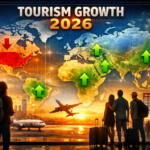
International tourism to the United States is in a complicated place as 2026 begins: foreign visitors are still spending at very high levels, but the volume of inbound trips remains uneven and, depending on the metric used, could be facing headwinds. For travelers planning U.S. trips—and for destinations that depend on foreign tourism dollars—the message is clear: the U.S. remains a top global draw, but the recovery is no longer a simple “up and to the right” story.
Big picture: the money is there, but arrivals are mixed
On the spending side, the United States is still one of the world’s most lucrative inbound tourism markets. The National Travel and Tourism Office (NTTO) reported that international visitors spent nearly $168.5 billion year-to-date in 2025 (through August 2025), averaging about $693 million per day injected into the U.S. economy. In August alone, visitors spent roughly $21.1 billion, essentially flat compared to August 2024—an early sign that growth has slowed after the initial post-pandemic rebound.
Air travel spending also shows the same mixed signal. In September 2025, passenger fare receipts received by U.S. carriers from international visitors were $2.8 billion, down compared to the prior year’s roughly $3.1 billion. That suggests international demand is not accelerating at the pace many U.S. destinations hoped for.
Are international visits rising or falling?
This depends on which forecast you trust—and that’s part of the “current state” story.
- U.S. Travel Association / Tourism Economics forecast (Fall 2025): inbound international visits are projected to decline 6.3% in 2025, from 72.4 million in 2024 to 67.9 million in 2025—the first decline since 2020.
- NTTO forecast: NTTO projected total international visitors would increase to 77.1 million in 2025 (up from 72.4 million in 2024) and rise to 85 million in 2026, surpassing 2019 levels.
What explains the difference? Forecasting models don’t always use identical definitions (e.g., counting methods, market coverage, or timing assumptions). But the broader travel-industry consensus in late 2025 was that inbound travel momentum weakened, particularly toward the end of the year. One trade report citing NTTO data noted July 2025 inbound arrivals of 6.28 million were down 8.9% year-over-year.
Who is coming—and what they spend
Even when inbound visitor numbers soften, foreign tourism tends to “punch above its weight” economically, because international travelers spend more per trip than domestic visitors. That dynamic is visible in major gateways like New York City: NYC Tourism + Conventions reported that 2025 visitor totals were near record highs overall, but international visitation fell about 5%, contributing to an estimated $4 billion loss in direct spending—because international tourists account for a disproportionate share of tourism revenue.
On a national level, the World Travel & Tourism Council (WTTC) projected that the U.S. could see international visitor spending fall to just under $169 billion in 2025, down from $181 billion in 2024. Separately, U.S. Travel stated international visitors were expected to spend about $173 billion (for the year referenced in its forecast release), reinforcing the point that spending remains very large even if volumes wobble.
What’s driving the trend?
Several factors appear to be shaping inbound travel patterns:
- Border friction, perception, and policy signals
Media coverage of stricter visitor policies can dampen demand—especially when competing destinations are actively courting international travelers. A recent Washington Post report describes an expansion of a visa bond pilot requiring certain visitor-visa applicants to post refundable bonds of $5,000 to $15,000, potentially adding cost and complexity for some travelers. - Air capacity and pricing
If airfares remain high and seat capacity grows slowly, travel demand gets “rationed” by price. Declining passenger fare receipts in September 2025 point to softer demand than the prior year. - Market shifts (Canada matters—a lot)
U.S. Travel industry reporting in late 2025 highlighted inbound weakness linked in part to a downturn from Canada. Since Canada is historically the top inbound market by volume, even small percentage swings can materially affect the total. - Major events bump (2026 tailwinds)
Even pessimistic forecasts expect improvement with global events coming to the U.S., including major sports and commemorations.
What travelers should expect in 2026
For foreign tourists, 2026 likely delivers a mixed experience: strong U.S. travel demand will keep prices firm in major cities, while a softer inbound recovery in some corridors could mean better availability in shoulder seasons and secondary destinations. The smart play is planning around the calendar—booking early for event-driven peak periods and targeting less crowded regions for better value.
For the U.S. travel economy, the key takeaway is this: inbound tourism remains one of America’s most valuable service exports, but competition is fierce—and policy, perception, and processing capacity will matter as much as marketing.
About The Author