Tourism Winners and Losers in 2026: Where Visitor Numbers Are Rising and Falling
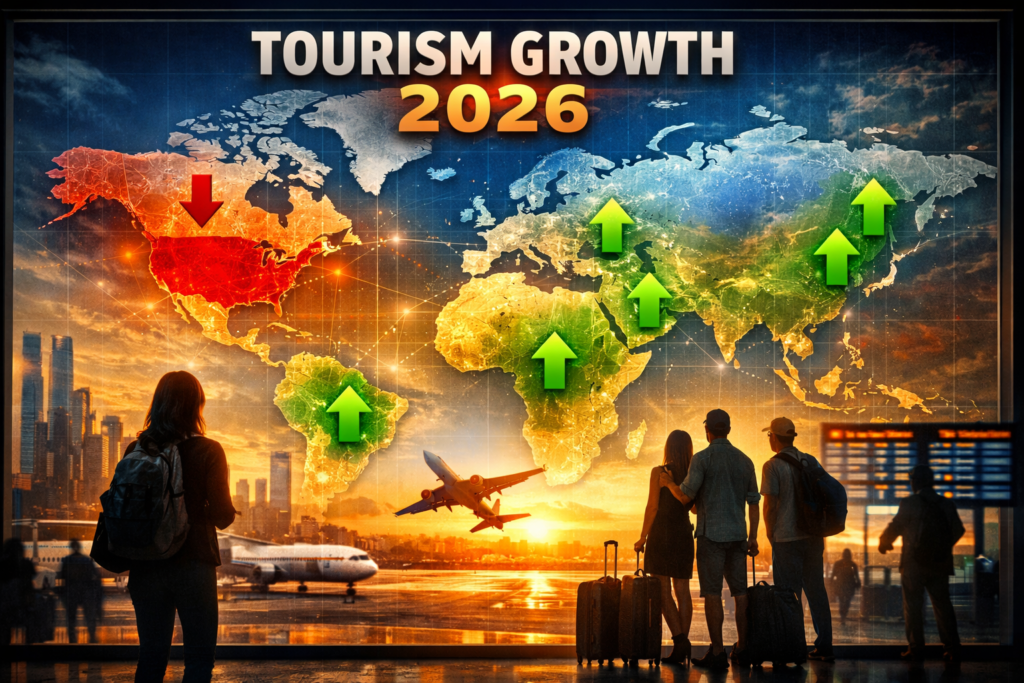
Global tourism is heading into 2026 with solid momentum overall, but the gains won’t be evenly distributed. New forward-looking indicators and regional forecasts suggest that some countries will see another year of strong tourism growth—driven by improved air capacity, major investments, and “reopening catch-up”—while others face stagnation or decline due to cost pressures, friction at borders, weaker source markets, or broader economic cooling.
UN Tourism reported international arrivals were up 5% in January–September 2025 versus 2024, putting global tourism slightly above pre-pandemic levels and setting the stage for continued recovery into 2026. But the “headline recovery” hides a deeper story: travelers are shifting where they go, how long they stay, and how much value they demand for their money.
Countries likely to see tourism growth in 2026
1) Saudi Arabia and the Middle East powerhouses
If 2026 has clear “growth leaders,” the Middle East belongs at the top of the list. The World Travel & Tourism Council (WTTC) continues to describe the region as one of the fastest-growing in Travel & Tourism, pointing specifically to Saudi Arabia’s surging inbound visitor spending and unprecedented infrastructure investment—airports, cruise terminals, and large-scale hospitality development.
That investment matters for travelers: more seats, more hotel rooms, and more route competition typically translate into more arrivals and expanded tourism offerings, including stopover programs, luxury developments, and high-end cultural tourism.
Countries to watch: Saudi Arabia, UAE, Qatar, Oman.
2) Japan, South Korea, and Northeast Asia’s rebound
While not all Asia-Pacific markets recover at the same speed, Northeast Asia’s bounce-back remains one of tourism’s biggest structural stories. After years of restricted travel patterns and phased reopenings, these destinations are benefiting from pent-up demand, expanded flight schedules, and renewed interest in urban travel paired with nature-based itineraries.
UN Tourism and Amadeus hosted a major “Travel Insights” event in December 2025 focused on trends shaping early 2026 for Asia and the Pacific and the Americas, emphasizing forward indicators and traveler behavior shifts. The key takeaway for 2026: Asia is no longer simply “returning”—it’s re-competing aggressively for market share.
Countries to watch: Japan, South Korea, Thailand, Vietnam (and parts of China’s outbound travel market fueling neighboring destinations).
3) Sri Lanka and value-driven destinations
Some of 2026’s biggest growth winners may be destinations that combine strong value with a clear national strategy to rebuild tourism. In early January 2026, Reuters reported Sri Lanka is targeting 3 million tourists in 2026, up about 27% from its record 2.36 million in 2025, with tourism positioned as a key pillar of economic recovery.
Sri Lanka’s story signals something broader: travelers are still price-sensitive, and destinations offering high “experience-per-dollar” are likely to outperform—especially for long-haul visitors willing to go farther when the value is compelling.
Countries to watch: Sri Lanka, Indonesia (outside peak Bali pricing), parts of Latin America with improving connectivity.
4) Countries benefiting from “trend travel”
Not all growth is driven by macroeconomics—culture matters. Major 2026 travel trends include immersive experiences, wellness travel, and heritage-driven itineraries. Condé Nast Traveler’s 2026 trend report includes themes like ancestry travel, luxury rail journeys, and wellness-focused holidays—all of which tend to lift specific destinations that package these experiences well.
Countries likely to benefit: Italy (heritage), Japan (rail + culture), Iceland/Norway (wellness + nature), Peru (heritage + food tourism).
Countries that could see stagnation or decline in 2026
1) The United States: big spender market, but inbound friction remains a risk
The U.S. remains a tourism superpower, but inbound travel performance has shown weakness recently. Tourism Economics noted U.S. international inbound travel remained weak in 2025, with an outlook revision including an expected decline in overseas visits compared with prior assumptions, alongside a projected drop in inbound spending.
U.S. Travel’s latest forecast expects inbound visits to resume growth in 2026, but only modestly. Meanwhile, new or expanded policy measures can influence traveler sentiment: the Washington Post reported on the U.S. expanding a visa bond pilot that can require certain visitor-visa applicants to post refundable bonds of $5,000–$15,000, raising concerns about perceived barriers for some visitors.
What this means for 2026: the U.S. may still grow, but it could underperform faster-recovering regions unless entry friction and perception issues improve.
2) High-cost destinations facing value pressure
In 2026, travelers continue to compare total trip costs: airfare, accommodation, local transport, and even “hidden fees.” High-cost destinations can still succeed—but they may not grow as fast if visitors trade down to better value.
This risk is amplified by the global economic outlook. The UN’s World Economic Situation and Prospects 2026 projects global growth slowing to 2.7% in 2026, with weaker growth in parts of Europe and ongoing vulnerabilities in developing economies. Slower growth typically pressures discretionary spending, which can reduce long-haul trips or shorten stays.
At risk: destinations where costs surged post-pandemic—certain cities in Western Europe, parts of the Caribbean, and ultra-premium markets dependent on long-haul travel.
3) Countries hit by climate disruption or instability
One of the strongest predictors of tourism declines is uncertainty—whether driven by safety perceptions, extreme weather, or inconsistent travel infrastructure. Some destinations may still grow, but volatility increases and demand becomes more seasonal.
This is where travel planning becomes more cautious in 2026: travelers aren’t necessarily abandoning destinations—they’re shifting to shoulder seasons, choosing flexible booking terms, or selecting safer alternatives.
Bottom line for 2026 travelers
Tourism growth in 2026 will concentrate in destinations with:
- aggressive investment in tourism infrastructure,
- competitive air routes,
- strong value,
- and clear messaging around safety and visitor experience.
Countries facing entry friction, cost surges, or economic constraints may not collapse—but they could see slower growth or declines relative to peers, even as global tourism rises overall.
About The Author