Top 5 Safest Places to Visit in the World (2026): Where Peace of Mind Meets Bucket-List Travel
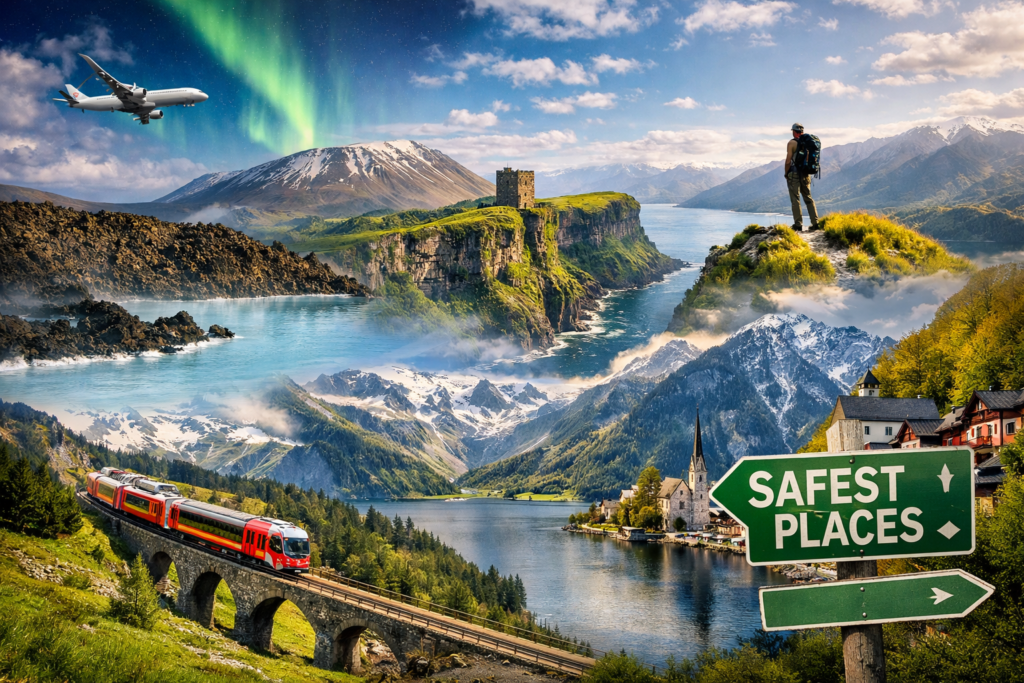
In 2026, travelers are planning differently. It’s not just about cheap flights, “Instagrammable” views, or the latest viral destination. More people are prioritizing something far more valuable: safety. From solo travelers and retirees to families with kids, tourists are increasingly choosing countries with low crime, high political stability, strong healthcare, and reliable infrastructure.
To identify the safest places to visit in the world, travel analysts often lean on the Global Peace Index (GPI)—one of the most widely cited international benchmarks for peace and safety. In the most recent rankings, Iceland, Ireland, New Zealand, Austria, and Switzerland lead the world as the most peaceful countries overall.
Here are the Top 5 safest places to visit in 2026, plus what travelers should know before booking.
1) Iceland: The World’s Safest Destination for Travelers
Iceland has become almost legendary for its safety record. Crime is rare, violent crime is extremely uncommon, and the country is consistently ranked #1 on global peace metrics.
But Iceland’s appeal goes beyond safety. Travelers come for the Ring Road, glacier lagoons, lava fields, geothermal pools, and Northern Lights. Reykjavik is one of the easiest capitals to explore on foot, and Icelandic tourism infrastructure is well-developed, even in remote areas.
Traveler tip: Iceland’s main safety risk isn’t crime, it’s nature. Sudden weather shifts, high winds, and unstable terrain near cliffs and waterfalls mean tourists should respect warnings, stay on marked trails, and avoid “one step too close” photo risks.
Best for: road-trippers, photographers, solo travelers, couples.
2) Ireland: Friendly, Walkable, and Exceptionally Safe
Ireland ranks among the most peaceful countries in the world, combining low violent crime rates with strong institutions and a welcoming culture.
For visitors, this translates into a destination where it feels easy to move around: English-speaking, tourist-friendly, and packed with memorable experiences—from the Cliffs of Moher and the Wild Atlantic Way to Dublin’s literary heritage and pub culture.
Ireland’s big advantage is “soft safety”, the everyday comfort of travel: public transport works, locals are helpful, and cities are generally walkable at night in the main districts.
Traveler tip: Like anywhere, petty theft can happen in crowded tourist areas of Dublin. Use basic urban awareness: zippered bags, phone secure, don’t leave valuables in rental cars.
Best for: first-time international travelers, heritage tourism, scenic driving routes.
3) New Zealand: Adventure Capital with World-Class Stability
New Zealand is a rare blend of thrill and tranquility. Despite being an adrenaline destination, bungee jumping, heli-hiking, and alpine treks, it remains one of the world’s most peaceful nations.
From Queenstown’s high-energy adventure scene to the serenity of Milford Sound, Rotorua geothermal landscapes, and the vineyards of Marlborough, New Zealand is built for travel. It’s also especially popular with solo travelers and women travelers because it “feels safe” nearly everywhere.
Traveler tip: Similar to Iceland, New Zealand’s biggest risks are environmental: hiking trails, weather exposure, ocean currents, and driving fatigue (especially on winding roads). Plan conservatively and treat long drives seriously.
Best for: hikers, nature lovers, adventure travelers, long-stay travelers.
4) Austria: A Safe European Classic That Still Feels Underrated
Austria remains one of Europe’s most stable, safe, and visitor-friendly countries; consistently ranking in the global top tier for peacefulness.
Vienna is often highlighted as one of the world’s most livable cities, and that livability shows up in tourism: clean streets, efficient public transport, and an orderly travel experience. But Austria is more than Vienna. Salzburg, Hallstatt, and the Austrian Alps deliver “storybook Europe” without the stress.
Austria also makes multi-country trips easy. It’s a comfortable home base for visiting nearby Germany, Switzerland, Italy, Slovenia, and the Czech Republic.
Traveler tip: Austria is extremely safe overall. Standard precautions apply in busy train stations and crowded holiday markets. Watch your bags and wallets.
Best for: city breaks, classical music lovers, alpine vacations, multi-country European trips.
5) Switzerland: Low Crime, High Comfort, Stunning Landscapes
Switzerland’s international reputation, precision, cleanliness, and excellent public services extend directly into travel safety. It ranks among the most peaceful destinations globally and is famous for having very low crime plus strong emergency and medical systems.
For tourists, Switzerland offers a premium experience: the Glacier Express, Lauterbrunnen valley, Zermatt and the Matterhorn, Lake Lucerne, and pristine mountain towns connected by world-class rail.
Yes, Switzerland is expensive, but in return, visitors often get what they’re paying for: reliability, safety, and an easy travel flow even across multiple regions and languages.
Traveler tip: Hiking safety matters here, too. Many injuries come from tourists attempting alpine routes without the correct footwear or realistic fitness expectations. Check trail ratings and conditions before heading out.
Best for: luxury nature travel, rail journeys, hiking, and family trips.
Why These Countries Top the Safety Lists
The Global Peace Index measures safety and stability using multiple indicators, including societal safety, conflict levels, and militarization. In 2025 rankings, these five countries lead the world overall.
And while no destination is risk-free, choosing a high-ranking “peace index” country significantly reduces common travel concerns of violent crime, political unrest, and unreliable infrastructure.
Global Peace Index Map
About The Author